You have had a strong business day. Your terminal processed dozens of transactions — the lunch rush, the afternoon regulars, an evening booking. By closing time, you have processed thousands in payments. But when you check your account balance the next morning, the money is not there yet. Settlement lands in two to three business days. Rent is due on Friday. Your supplier is waiting on payment before the next delivery.
This gap between accepting payments and actually having access to that cash is one of the most persistent pressures on Hong Kong SMEs. It is one of the main reasons merchants are looking beyond their traditional bank, or taking a harder look at the virtual bank business accounts they have heard about but never properly compared.
This article breaks down how virtual bank business accounts work in Hong Kong, what the real differences are between providers, and most importantly, what merchants specifically should look for before choosing one.
Virtual banks in Hong Kong: What you need to know first
"Virtual bank" vs "digital bank" — why the name changed
Both terms refer to the same category of institution. "Virtual bank" was the HKMA's original licensed category designation since 2018. In October 2024, the HKMA formally renamed the category to "digital bank", partly because the Chinese equivalent of "virtual" (虛擬) carried unintended connotations of being fictional or unreliable, and partly to better reflect how these banks operate in practice.
There are currently 8 HKMA-licensed digital banks in Hong Kong: ZA Bank, ELE Bank (formerly Airstar Bank), livi Bank, Ant Bank HK, PAO Bank (Ping An Digital Bank), Fusion Bank, WeLab Bank, and Mox Bank. Most people still use the term "virtual bank" and it still appears in older regulatory documents, so you will encounter both.
Are virtual bank business accounts safe?
Yes, all 8 virtual bank business accounts are regulated by the HKMA under the same Banking Ordinance that governs traditional banks such as HSBC and Hang Seng Bank. These are fully licensed banks, not money service operators (MSOs) or stored-value facility (SVF) providers, which operate under a lighter regulatory framework.
Deposits are protected by the Hong Kong Deposit Protection Scheme (DPS), administered by the Hong Kong Deposit Protection Board (HKDPB), up to HKD 800,000 per depositor per bank.
Who can open a virtual bank business account?
This is a detail that catches many businesses off guard. For most digital banks, all directors, shareholders, and partners must hold a valid HKID. Companies must be registered and operating in Hong Kong, with taxation jurisdiction in Hong Kong only.
If any director or shareholder does not hold an HKID — for example, if your business has overseas co-founders or investors — most digital banks will be unable to process your application online. Consider verifying eligibility requirements directly with the bank before starting an application.
What SME merchants actually need from a business account
Most Hong Kong virtual banks tend to focus on features that matter more to startups or freelancers than to operating merchants: savings rates, investment products, sign-up bonuses. For an F&B operator, a retail shop owner, or a Direct-to-Consumer (DTC) brand processing daily transactions, the relevant questions are different.
Settlement speed
Settlement speed is one of the most operationally significant features for merchants. Many traditional banks in Hong Kong settle card transactions on a T+3 basis, which means three business days after the transaction date. For a merchant with rent due at the start of the month, receiving Friday and Saturday's revenue on Wednesday creates real cash flow pressure.
T+1 settlement, which means funds arriving the next business day, removes this gap entirely. There are also business accounts offering everyday settlement where your funds arrive the next day, regardless of whether it's a weekend or a public holiday. When evaluating a business account, confirm the settlement timeline explicitly, including how it applies on weekends and public holidays.
Multi-currency and cross-border transfers
If your business has overseas suppliers, imports goods, or sells to customers in other markets, a HKD-only account introduces friction at every step. Look for accounts that support the currencies you actually transact in, and compare FX rates and transfer fees directly as they may vary significantly between providers.
FPS (Faster Payment System) enables instant local HKD and CNY transfers at no or minimal cost. For overseas transfers, confirm whether the bank routes through SWIFT, intermediary banks, or a dedicated remittance platform as this usually affects both speed and total cost.
Understanding transfer fees
Transfer fees across Hong Kong digital banks range from HK$0 to HK$250 per transaction, depending on the method and destination. FPS transfers are typically free or close to it. CHATS and SWIFT transfers carry higher fees. For high-volume merchants, these costs can accumulate quickly, which is why it's important to review the full fee schedule before committing to a provider.
Integration with your payment setup
An account that sits entirely separate from your payment acceptance infrastructure, such as your POS terminals, QR payments, and payment links, means manual reconciliation at the end of every day. You are cross-referencing your terminal report against your bank statement, chasing discrepancies, and spending staff time on a problem that does not need to exist.
The cleaner solution is an account built to receive your settlement directly from your payment infrastructure. When the two are connected via the same provider with a shared data layer, daily reconciliation becomes automatic.
Expense visibility and reporting
For SMEs without a dedicated finance function, real-time transaction visibility and downloadable reports are practical necessities, not optional extras. Look for accounts that allow you to export transaction records and monthly summaries, filter by date or payment type, and produce data in a format your accountant can use.
Comparing business accounts in Hong Kong
The table below covers the six digital banks that offer business accounts, alongside KPay Business Account, which is a merchant settlement account.
| Provider |
Account opening fee |
Minimum deposit |
Currencies |
Transfer fee (FPS/local) |
Approval time |
| KPay Business Account |
Waived |
Waived |
18 |
From HK$4 |
As fast as 2 working days |
| ZA Bank |
HK$1,500< (12 months prepaid) |
HK$300 |
11 |
HK$0 - HK$50 |
As fast as 1 working day |
| livi Bank |
HK$1,200 |
HK$500 |
HKD, USD, CNY |
Transfer fee: HK$3 - HK$25 |
As fast as 1 working day |
| Ant Bank HK |
Waived |
Waived |
HKD, USD |
— |
As fast as 3 working days |
| PAO Bank |
Waived |
Waived |
HKD, USD, CNY |
— |
Not stated |
| Fusion Bank |
HK$1,200 |
Waived |
HKD, USD, CNY |
HK$0 - HK$50 |
As fast as 1 working day |
| EleBank (formerly Airstar Bank) |
HK$850 - HK$8,000 |
HK$150 |
HKD, USD, CNY |
HK$0 - HK$250 |
As fast as 2 working days |
Fees and account terms are based on publicly available information as of July 2026 — confirm current terms directly with each provider before applying.
KPay Business Account — built for merchants, not just businesses
KPay Business Account (KBA) is designed to work as the settlement layer for merchants who already use KPay to accept payments.
The practical effect: when your transactions process through KPay, settlement flows directly into your KBA. There is no cross-provider reconciliation, and no waiting to see whether the numbers match.
KPay Business Account at a glance:
- Streamlined onboarding: Existing KPay merchants apply via the KPay App easily — no additional documents required.
- Quick approval: Applications are approved in as fast as 2 working days.
- Global transfers: Transfer or remit in up to 20 currencies across 50+ regions, with same-day international transfers available. Transfer fees start from HK$4 via FPS or ACH.
- No hidden costs: No minimum deposit, no monthly service fee, and no hidden charges.
- Real-time customer support: Get dedicated help whenever you need it with support that's available 365 days a year, 24/7.
- Automated reporting: Download transaction records and monthly summaries at any time.
Who is KBA best suited for?
KBA is designed for merchants who want their settlement account and payment acceptance to work as one, rather than two separate systems that need to be reconciled manually at the end of every day.
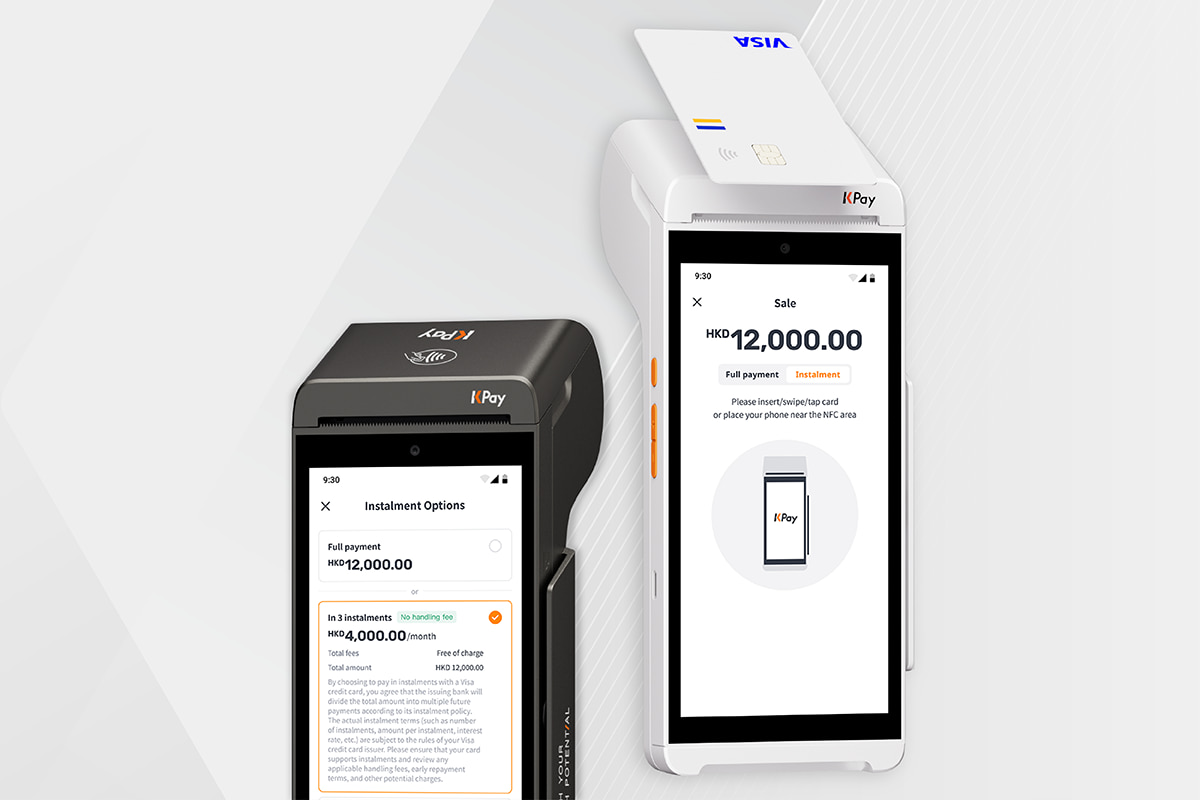
If you are already using KPay Terminal Pro, Tap to Pay, Static QR Code, or any of our online payment solutions, opening KBA completes the setup, as settlement flows directly into your account with no extra steps. If you are not a KPay merchant yet, it is worth knowing that applying for KBA and a KPay payment solution can be done together, so you start with an integrated setup from day one rather than connecting two systems later.
A quick look at the other digital banks in Hong Kong
- ZA Bank is the largest and most full-featured of the eight. It supports 11 currencies, offers small business loans up to HKD 4 million (for companies operating for at least one year), and includes stock and cryptocurrency trading within the app. Note that online business account opening requires prepayment of 12 months of service fees totalling HK$1,500. Strong choice for businesses that want an all-in-one financial platform.
- livi Bank is backed by Bank of China (Hong Kong), JD.com, and Jardines. It supports HKD, USD, and CNY and is well-regarded for everyday business banking. Account opening fee is HK$1,200, with a HK$500 minimum deposit.
- Ant Bank HK operates within the AlipayHK ecosystem, making it a natural fit for merchants whose customers transact through Alipay. Account opening is free with no minimum deposit. Supports HKD and USD. Approval takes up to 3 working days.
- PAO Bank (Ping An Digital Bank) is notable for its SME lending products — working capital loans with minimal documentation requirements. Account opening is free with no minimum deposit. Supports HKD, USD, and CNY.
- Fusion Bank integrates directly with WeChat Pay HK, making it relevant for merchants serving Mainland Chinese visitors or businesses embedded in the WeChat ecosystem. Supports HKD, USD, and CNY. Account opening fee is HK$1,200.
- EleBank (formerly Airstar Bank) offers both a streamlined and a standard corporate account at different price points. Known for competitive time deposit rates and China remittance capabilities.
WeLab Bank and Mox Bank do not offer business accounts — both are personal banking products only.
How to open a virtual bank business account in Hong Kong
Documents you will typically need
Requirements vary by bank, but most will ask for:
- Business Registration Certificate
- Certificate of Incorporation
- Proof of company registered address
- Hong Kong Identity Cards for all directors, shareholders, and authorised signatories
- Additional KYC documentation may be required for complex ownership structures or multi-layered entities
Remember to confirm requirements directly with the bank before starting your application, as documentation standards vary between providers.
How long does it take?
Digital bank business account applications are typically processed within 1 to 3 working days, compared to several weeks for traditional bank accounts, which often require in-person branch visits and more extensive documentation.
For existing KPay merchants, the KBA application can be approved in as fast as 2 working days.
Ready to close the gap between payments and settlement?
If you are already using KPay to accept payments, KPay Business Account is the natural next step. There's no additional documents needed for application, and approval can be as quick as two business days.